
Welcome to Catherine Failor's World
Author and whimsical Mind

I’ve been self-employed most of my life with work that’s been all over the map. Housecleaning, landscaping. Sold pastries baked in my kitchen. Manufactured a line of boutique soap distributed nationwide. Wrote two soapmaking books. Designed soap, candle and stepping stone molds which sold internationally.
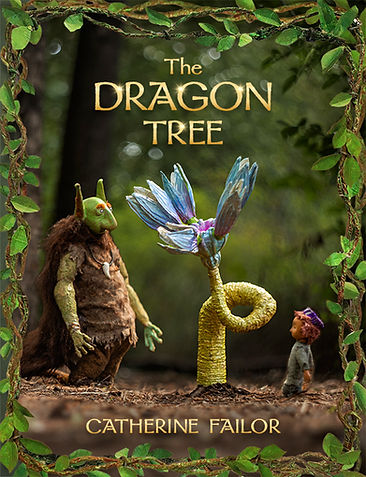
How does The Dragon Tree fit into this winding map? It began with a childhood addiction to comic books. My grandfather was also a nationally syndicated comic strip artist; the calm of his studio combined with the aroma of India ink and eraser lent another layer of romance to the art form. I was also blessed with living close to nature and disappeared for hours into the mountains, lost in fantasy. All these years later, The Dragon Tree blends my love of nature and my love of comic books. I wanted a“magical realism” feeling for the story, and so designed the characters and props, all photographed out of doors.
My home, studio and garden are in Portland Oregon. I also live part time in a small cabin in southwestern Colorado. No running water, not much electricity — for me, a truly magical place!


.jpg)

Handmade in a world gone digital
All characters, props, trees, stones, river, etc were designed by me and Mother Nature—No AI involved. Most people assume AI. It’s mind-boggling at how quickly AI has changed the way we see the world. It’s like some science fiction scene where one night a heavy fog wraps around a town and next morning people open their front doors, look up and vaguely wonder “Was our sky always green? Didn’t we have just one moon, not seven?” But somehow they can’t quite remember.
Couldn’t we have some kind of AI identification system? After all, cans of beans and bags of potato chips list their ingredients. Movies are tagged R and PG13, and at the end of the film we’re assured that characters and story are fiction and animals were well-treated. Alcohol, tobacco and pharmaceutical labels- those are more alarm bells than labels. Isn’t there a place for AI labels somewhere in between a harmless pinto bean and a deadly cigarette?
And how does this this blurring between the real and the digital affects us? Most of our world is experienced through our eyes and ears, and if we can no longer trust our senses, what then? We’re bobbing now on a digital sea as the shoreline continues to recede into the distance. For those of you who find this a bit worrying, what to do?
Art to the rescue! Here’s a truth passed down through the ages: Art is good for you. For starters, think about some of the words used in a Basic Design art class. Balance. Harmony. Order. Perspective. Unity. Is it an accident that these words also describe the qualities that help make for a happy life? I don’t think so.
Wherever you live on this planet, art can change any small space into the center of the universe where everything comes alive. You can work using most anything to create this magic spell: pencils, paint, clay, pebbles, tin cans, junk that no one thinks is beautiful except you. When you create, you bring something into the world that’s never existed before. Really think about that! It’s totally amazing! AI definitely can’t do this. And the longer an art is practiced and the better you get, the more your amazement grows.
There’s a niggling feeling that part of this work came from somewhere else. The ancient Greeks named the Muses as the source of this inspiration and guidance; we moderns might point to the quantum field. But nobody really knows. Which is another wonderful thing about art- it can lead us into the unknown where the real and the magical become one.

It’s just a simple thing that no one had thought of before.
It is my offering unto the world just like a cloud.
~ Ode to Paul, by Melissa Manchester